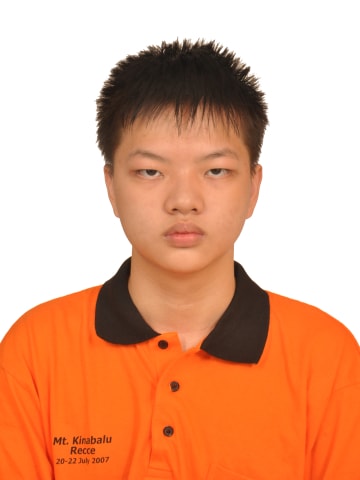
Joshua Tian Jin Tee
KAIST Electrical Engineering
Generative AI · Diffusion & Flow-Based Models
About
I am Joshua Tian Jin Tee (also written Joshua Tee Tian Jin), a generative AI researcher working on diffusion models, with a focus on preference learning to improve generation quality and reliability.
My research aims to reduce failure cases in diffusion-based generative systems by using preference signals to better align model outputs with user intent, while also improving sampling efficiency to support real-world applications.
Research Focus
My current work studies how preference signals and sampling dynamics interact in diffusion models, and how these interactions can be used to improve generation quality, reliability, and efficiency.
- Preference Learning: I investigate how preference-based supervision can be integrated into diffusion models to reduce failure cases, improve output quality, and increase consistency under a given prompt, both during training and at inference time.
- Efficient Sampling and Distillation: I work on accelerating diffusion sampling through distillation and trajectory-level learning, aiming to compress multi-step diffusion processes into fast generators without sacrificing reliability.
Publications
This work reframes stepwise preference optimization as an implicit form of gradient-based guidance, offering theoretical insights into its stability and empirical effectiveness.
We distill a multi-step diffusion model into a single-step generator by learning the ODE governing its diffusion trajectory using a PINN-inspired formulation.
This paper proposes a differentiable calibration metric that eliminates the need for post-hoc tuning, enabling end-to-end optimization of uncertainty estimates.
We present a novel approach to multimodal dialogue that effectively bridges historical image context to improve the coherence of generated text responses.
Proposes a calibration method for test-time prompt tuning that uses text feature dispersion to enhance the reliability of vision-language model predictions.
Investigates the use of Vector Quantization to defend DRL agents against adversarial attacks, ensuring robust performance in unpredictable environments.
* indicates equal contribution
Education
-
Ph.D. Program (Integrated)
KAIST
Electrical Engineering
2022 – Present -
Bachelor of Science
KAIST
Double Major in Mathematics and Physics
2018 – 2022
Services & Awards
Academic Service
- Reviewer: NeurIPS 2025, ICLR 2026
Awards
- Top Reviewer: NeurIPS 2025